Alaska doesn’t license paralegals or require specific education, so you can enter through a certificate or a degree. Employers set the bar, and most prefer formal training. Alaska paralegals earned a median of $68,700 in May 2025, well above the national median, in a small market of about 570 jobs.
Alaska’s vast landscape holds more opportunity than you might expect. From Anchorage’s business center to Juneau’s government offices and Fairbanks’ interior operations, paralegals play a vital role in Alaska’s legal sector. Whether corporate law’s intricacies interest you, criminal law’s pace holds your attention, or low-cost legal services sound like a good fit, you’ll find varied work throughout the Last Frontier.
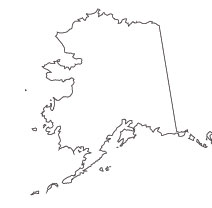
Firms including Ashburn & Mason, Davis Wright Tremaine, and Dorsey & Whitney LLP operate in Alaska, and paralegals here work on everything from oil and gas transactions to environmental law and Alaska Native rights cases. It’s a small market that pays well, which makes the credentials you bring to it matter more than they would in a larger state.
Alaska Paralegal Requirements
Alaska state law doesn’t require paralegals to meet specific training or education requirements before employment. That flexibility means you can enter the field through several routes, from a certificate program to a bachelor’s degree in paralegal studies.
Alaska Rule of Professional Conduct 5.3 sets the framework for paralegal work in the state. It requires lawyers with managerial or direct supervisory authority to make reasonable efforts to ensure a nonlawyer assistant’s conduct is compatible with the lawyer’s own professional obligations, and it sets out the circumstances in which the lawyer becomes responsible for that conduct. In practice, that’s why paralegal work in Alaska is attached to an attorney, a firm, or a legal department rather than performed independently.
That same framework marks the boundary of the role. A paralegal in Alaska can’t give legal advice, set fees, accept a case, or represent a client in court. Those acts are reserved to licensed attorneys, and performing them is the unauthorized practice of law.
While Alaska doesn’t mandate formal education, most employers prefer candidates with paralegal training. The legal field has grown more complex, and attorneys expect paralegals to handle substantial responsibility. Formal education gives you a real advantage in a market this size.
Education & Training Options
As the paralegal profession gains standing within Alaska’s legal community, more aspiring paralegals choose formal education as their entry point. Paralegal studies coursework is available through certificate and degree programs, each with distinct advantages.


Certificate Programs
Certificate programs take less time than degree programs because they focus only on paralegal skills and skip general education coursework. They work well if you already hold a bachelor’s degree in another field or want to enter the workforce quickly.
Two types exist:
- Undergraduate certificates are open to anyone regardless of prior higher education. These usually take 6 to 12 months.
- Post-baccalaureate certificates require a bachelor’s degree in any subject first. Coursework is exclusively paralegal studies, built to move you into the career.
Degree Programs
Both associate and bachelor’s degrees are available in paralegal studies. Degree programs pair specialized paralegal coursework with general education that broadens your base.
- Associate of Applied Science (AAS) in Paralegal Studies is a two-year program balancing paralegal coursework with general education requirements, built for direct entry to employment.
- Bachelor’s degree in legal studies is a four-year program offering broader legal education alongside paralegal credentials, which can open advancement and specialized positions.
Gaining Experience While You Study
Education gets you considered. Experience gets you hired, and in a state with roughly 570 paralegal jobs that matters more than it would elsewhere.
Internships and practicums arranged through your program are the most direct route, since the placement is vetted and the credit counts. Volunteering with an Alaska legal aid organization works when internships are scarce and puts you in front of real client files. Support roles inside a law office, including file clerk and legal secretary positions, put you in the building, and in a small market that proximity often converts into a paralegal role.
Choosing an Accredited Program
For any program, check whether the school is institutionally accredited and whether the paralegal program itself holds American Bar Association approval. Employers and bar associations often prefer credentials that meet defined standards. ABA approval isn’t required for national certification, though it can simplify eligibility for some exams and carries weight in competitive markets.
National Certification Options
Paralegals who earn an educational certificate are certificated paralegals. Those who meet education or experience requirements and pass a national exam become certified paralegals. National certification demonstrates command of the field and is one of the clearer ways to stand out in a small hiring market.
Three organizations offer national paralegal certification:
- Paralegal Advanced Competency Exam (PACE), leading to the Registered Paralegal (RP) credential, from the National Federation of Paralegal Associations (NFPA). Aimed at experienced paralegals.
- Paralegal CORE Competency Exam (PCCE), leading to the CORE Registered Paralegal (CRP) credential, also from NFPA. The entry-level route.
- Certified Paralegal (CP) from the National Association of Legal Assistants (NALA), the most widely recognized paralegal credential. CLA is a legacy designation NALA still honors for existing holders rather than a current exam name.
- Professional Paralegal (PP) from NALS. Existing PP credentials remain valid and holders can keep recertifying, but NALS has paused new individual certification exam registrations while it revises its exams, so PP isn’t currently a route a new candidate can choose.
Eligibility differs by credential, so check the certifying body’s current education and experience rules before committing to an exam.
ABA-Approved Programs
The American Bar Association approves paralegal education programs that meet defined standards for curriculum, faculty qualifications, and student resources. Approval attaches to a specific program rather than to a school, and the ABA refreshes its directory every February and August.
Two things are worth knowing before you rule anything out. The ABA doesn’t approve fully online paralegal programs, and it won’t approve entry-level certificates under 60 semester hours. That excludes a lot of perfectly good programs by category rather than by quality, including most of the online options an Alaska student might reasonably consider.
Alaska doesn’t require ABA-approved education, and it isn’t mandatory for national certification. Weigh it alongside program format, schedule flexibility, cost, and career services.
Paralegal Schools in Alaska
The knowledge required to perform legal support work is built through formal education in paralegal studies. As attorneys, corporations, and government agencies work within an increasingly complex legal framework, Alaska employers expect paralegals to take on substantial responsibility.
Alaska offers in-state programs at two universities plus access to online options from schools nationwide.
University of Alaska Anchorage
University of Alaska Anchorage (UAA) is a four-year public university in Anchorage. Its Legal Studies Program holds ABA approval, verified against the ABA directory as of its September 2026 refresh, covering these credentials:
- Associate of Applied Science (AAS) in Paralegal Studies, on campus, foundational paralegal education in two years
- Bachelor of Arts (BA) in Legal Studies, on campus, broader legal education alongside paralegal credentials
- Paralegal Studies Certificate, on campus, post-baccalaureate, for those holding a bachelor’s degree in another field
UAA also offers a Legal Nurse Consultant certificate for registered nurses seeking paralegal credentials. Confirm its current ABA status directly with the program, since approval is granted credential by credential.
University of Alaska Fairbanks
University of Alaska Fairbanks (UAF) is a separate four-year public university serving Interior Alaska. Its Paralegal Studies Program runs through the UAF Community & Technical College and holds ABA approval for one credential:
- Associate of Applied Science (AAS) in Paralegal Studies, on campus, preparing students for entry-level paralegal positions
UAF also offers a paralegal studies minor that can be combined with another bachelor’s major. That minor is not listed in the ABA directory, so treat it as a useful complement to a degree rather than an ABA-approved paralegal credential.
Online Program Options
Many accredited schools nationwide offer online paralegal programs without a residency requirement, which matters in a state where the two in-state programs are both campus-based and hundreds of miles apart. Online study suits working adults and anyone outside Anchorage or Fairbanks.
Verify institutional accreditation, and remember that a fully online program cannot hold ABA approval regardless of its quality. Contact schools directly for tuition, format, and start dates.
Salary & Compensation in Alaska
Alaska pays paralegals well. The state’s mean wage runs above the national mean, and its median sits well above the national median, which reflects both a high cost of living and an economy driven by oil and gas, government, and a large military presence.
Statewide Salary Overview
As of May 2025, Alaska paralegals earned a median of $68,700 per year, or $33.03 per hour, against a national median of $62,890. The mean was $73,440, or $35.31 per hour, against a national mean of $69,700. Alaska ranks among the better-paying states for this occupation.
The figures below describe how pay is distributed across Alaska paralegals. They are not experience brackets. A long-tenured paralegal in a small office can sit near the 10th percentile, and a newer one in a specialized Anchorage practice can sit at the 75th.
| Percentile | Hourly Wage | Annual Salary |
|---|---|---|
| 10th percentile | $25.88 | $53,830 |
| 25th percentile | $29.38 | $61,100 |
| Median (50th percentile) | $33.03 | $68,700 |
| 75th percentile | $40.81 | $84,880 |
| 90th percentile | $47.75 | $99,320 |
| Mean (average) | $35.31 | $73,440 |
Alaska paralegals at the 90th percentile earn $99,320 or more annually, roughly $25,900 above the state mean. The wage data don’t identify which practice areas account for those positions, since BLS publishes paralegal wages by occupation and geography rather than by legal specialty.
Paralegal compensation is almost evenly divided between hourly and salaried pay. NALA survey data found that 51% of paralegals were salaried, while about 49% were paid hourly. That comes from NALA’s Utilization & Compensation Survey, which samples the profession nationally rather than measuring Alaska specifically. Worth knowing before you evaluate an offer, because being paid hourly isn’t the same as freelancing. An hourly paralegal is normally still an employee.
Salary by Metro Area
BLS publishes wage data for two Alaska metro areas. Fairbanks posts the higher mean of the two, though on a much smaller employment base, so read it as a small sample rather than a reliable ranking.
| Metro Area | Employment | Annual Mean Wage | Annual Median Wage | 90th Percentile |
|---|---|---|---|---|
| Fairbanks-College | 60 | $74,980 | $71,390 | $97,350 |
| Anchorage | 390 | $71,850 | $66,210 | $97,390 |
| Alaska statewide | 570 | $73,440 | $68,700 | $99,320 |
Anchorage employs roughly two-thirds of Alaska’s paralegals. Its economy rests on a heavy military presence, transportation through Ted Stevens Anchorage International Airport, and its role as the state’s finance and communications center. Fairbanks and Juneau account for most of the rest, with Juneau weighted toward state government legal work.
Factors Affecting Paralegal Salaries
Several things influence what you’ll earn as an Alaska paralegal:
- Specialization. Expertise in oil and gas law, environmental law, or Alaska Native law is scarce and valued.
- Employer type. Large firms and corporate legal departments typically pay more than small firms or nonprofits.
- Location. The two metro areas differ, and cost of living varies sharply across the state.
- Education and certification. National credentials and degrees can raise earning potential.
- Practice area. Corporate, energy, and specialized litigation work generally pays above general practice.
Job Outlook & Career Growth
Alaska’s paralegal market is small, well paid, and not growing. Being straight about that is more useful than optimism, because it changes how you should plan an entry into it.
BLS counted 570 paralegals and legal assistants employed in Alaska as of May 2025. That figure comes from a survey of employers, so it doesn’t capture self-employed or contract paralegals working independently.
ProjectionsCentral, using a 2024-34 projection cycle, expects Alaska paralegal employment to fall from 560 to 530, a decline of 30 jobs or 5.3%, with about 50 openings per year over the decade. Because net employment is shrinking, those openings come from paralegals retiring or leaving the occupation rather than from new positions being created. Replacement openings are still real jobs and still hire people, but they describe a different market than one that’s expanding. Note also that the projection base and the wage survey count come from two different programs measuring different things, so the numbers aren’t versions of each other.
Nationally, the BLS projects little or no change for paralegals and legal assistants over its 2025-35 cycle, from 404,900 jobs to 403,800, with roughly 40,800 openings per year. BLS attributes the limited growth partly to technology, including artificial intelligence, making paralegals more efficient at research and document preparation.
What this means in practice: about 50 Alaska openings a year against a national picture that’s flat. Credentials, specialization, and local relationships carry more weight here than in a growing market, and relocating within the state may matter as much as any of them. Explore different paralegal career paths to find the specialization that best fits your interests.
Where the Work Is
Several sectors account for most Alaska paralegal demand:
- Energy and natural resources. Oil, gas, and mining operations need paralegals for regulatory compliance, contracts, and environmental matters.
- Government and military. Federal, state, and military installations employ legal support staff, with Juneau concentrated in state government.
- Corporate legal departments. Larger Alaska businesses maintain in-house legal teams.
- Healthcare. Hospitals and health organizations need paralegals for compliance, risk management, and malpractice matters.
- Alaska Native law. Alaska Native corporations and tribal entities require legal support for land claims, natural resources, and governance. This is close to unique to Alaska and a genuine specialization.
Career Advancement
Experienced Alaska paralegals advance through several routes:
- Specializing in high-demand practice areas
- Moving into senior paralegal or paralegal manager roles
- Transitioning into legal operations or compliance
- Working for federal agencies or military installations
- Pursuing further education toward law school or legal administration
Professional Associations
Alaska has professional organizations that provide continuing education, networking, and career support for paralegals and legal support staff.
Alaska Association of Paralegals (AAP)
Based in Anchorage, the Alaska Association of Paralegals (AAP) is an affiliate of the National Federation of Paralegal Associations (NFPA). AAP offers continuing education, a job bank, networking, and current information about the profession, and helps members prepare for NFPA’s PACE and PCCE exams.
AAP offers five membership classes:
- Full, open to any employed paralegal
- Associate, open to anyone interested in the paralegal profession
- Student, open to full-time students not employed as paralegals
- Sustaining, open to any group, firm, corporation, institution, or individual supporting AAP
- Government, open to employees of city, state, federal, or military government
NALS of Anchorage
NALS of Anchorage represents legal support staff, including paralegals and legal secretaries. It offers continuing legal education, support for members pursuing national certification, and networking. Confirm current chapter activity directly, since local chapter status changes.
Fairbanks Association of Legal Assistants (FALA)
The Fairbanks Association of Legal Assistants (FALA) serves legal assistants and paralegals in Interior Alaska and has historically been affiliated with the National Association of Legal Assistants (NALA). It organizes continuing education, supports members pursuing NALA certification, and builds working relationships with other legal groups in the region.
FALA is a separate organization from the Alaska Association of Legal Administrators (Alaska ALA), which is a chapter of the Association of Legal Administrators and serves people who manage law office operations rather than paralegals. Confirm FALA’s current contact details and membership terms directly before relying on them.
Major Employers & Law Firms
Law firms are the most common entry point into Alaska paralegal work. Larger firms hire more paralegals and are likelier to offer structured training.
Alaska’s Major Law Firms
Firms operating in Alaska include:
- Jermain, Dunnagan & Owens, P.C.
- Cook Schuhmann & Groseclose, Inc.
- Squire Patton Boggs
- Hartig Rhodes LLC
- Davis Wright Tremaine LLP
- Perkins Coie LLP
- Ashburn & Mason, P.C.
- Dorsey & Whitney LLP
- Atkinson, Conway & Gagnon, Inc.
- Baxter Bruce & Sullivan P.C.
- Stoel Rives LLP
- Manley & Brautigam, P.C.
- Tindall Bennett & Shoup, P.C.
Other Major Employers
Beyond firms, Alaska paralegals work for energy companies including ConocoPhillips Alaska, ExxonMobil, and Hilcorp, which acquired BP’s Alaska business in 2020. Alaska Native corporations, healthcare organizations such as Providence Alaska Medical Center and the Alaska Native Tribal Health Consortium, and federal, state, and municipal agencies all maintain legal and compliance functions that employ paralegals.
Important Contacts for Alaska Paralegals
- Alaska Bar Association
- Alaska Division of Corporations, Business and Professional Licensing
- Alaska Court System
Frequently Asked Questions
Does Alaska require paralegal certification or licensing?
No. Alaska doesn’t require paralegals to hold certification or meet specific education requirements before employment. Most employers prefer candidates with formal paralegal education through a certificate or degree program. Alaska Rule of Professional Conduct 5.3 requires attorneys to make reasonable efforts to ensure a nonlawyer assistant’s conduct is compatible with their own professional obligations, but it doesn’t mandate paralegal certification.
How long does it take to become a paralegal in Alaska?
It depends on the program rather than on any Alaska rule. An Associate of Applied Science takes about two years of full-time study and a bachelor’s degree in legal studies about four. Certificate programs vary widely, from under a year for an accelerated post-baccalaureate route to two years or more part-time, so check the specific program’s published schedule.
What is the average paralegal salary in Alaska?
As of May 2025, Alaska paralegals earned a median of $68,700 per year, or $33.03 per hour, with a mean of $73,440. Pay ranges from $53,830 at the 10th percentile to $99,320 at the 90th. Both figures sit above the national median of $62,890 and mean of $69,700. These are pay-distribution percentiles rather than experience levels.
Can I work as a paralegal in Alaska without a degree?
Yes. Alaska law doesn’t mandate formal education for paralegals. Most employers prefer candidates with a paralegal certificate or degree, and in a market of roughly 570 jobs the competition for each opening is real. Completing at least a certificate program is the practical minimum for most positions.
What can’t a paralegal do in Alaska?
Alaska paralegals can’t give legal advice, set legal fees, accept a case on their own authority, or represent a client in court. Those acts are reserved to licensed attorneys, and performing them constitutes the unauthorized practice of law. Alaska Rule of Professional Conduct 5.3 also places supervisory responsibility on the attorney, which is why paralegal work here is always performed under attorney supervision.
Are online paralegal programs accepted in Alaska?
Yes. Alaska employers accept online paralegal programs from institutionally accredited schools, and online study is often the practical choice for anyone outside Anchorage or Fairbanks. Note that the ABA doesn’t approve fully online paralegal programs, so an online program will not carry ABA approval no matter how strong it is. Verify institutional accreditation before enrolling.
Which Alaska paralegal programs are ABA-approved?
Two Alaska institutions hold ABA approval. The University of Alaska Anchorage Legal Studies Program is approved for its AAS in Paralegal Studies, BA in Legal Studies, and post-baccalaureate Paralegal Studies Certificate. The University of Alaska Fairbanks Paralegal Studies Program, through its Community and Technical College, is approved for its AAS. UAF’s paralegal studies minor is not listed in the ABA directory. Approval attaches to specific credentials, and the ABA refreshes its directory every February and August.
Should I pursue national paralegal certification?
It isn’t required in Alaska, but in a small market a national credential is one of the clearer ways to separate yourself. Current options are NALA’s Certified Paralegal and NFPA’s PACE and PCCE. NALS’ Professional Paralegal remains valid for existing holders, but NALS has paused new individual exam registrations. Certification usually makes most sense after some work experience, or if you’re targeting larger firms or federal agencies.
What are the job prospects for paralegals in Alaska?
Alaska employed about 570 paralegals as of May 2025. ProjectionsCentral’s 2024-34 cycle projects employment falling from 560 to 530, a 5.3% decline, with roughly 50 openings per year. Because net employment is shrinking, those openings come from people leaving the occupation rather than from new positions. They’re still real jobs, and Alaska pay is well above the national median, but the market is small and not expanding. Anchorage accounts for roughly two-thirds of the state’s paralegals.
Key Takeaways
- Alaska doesn’t license paralegals or require specific education, but most employers prefer formal training through a certificate or degree program
- Paralegals work under attorney supervision and can’t give legal advice, set fees, or represent clients in court
- Alaska’s median paralegal wage was $68,700 in May 2025, above the national median of $62,890, with a 90th percentile of $99,320
- Fairbanks posts the higher metro mean at $74,980, though on only 60 jobs. Anchorage employs about two-thirds of the state at a $71,850 mean
- ProjectionsCentral’s 2024-34 cycle projects Alaska employment declining 5.3%, from 560 to 530, with about 50 openings a year that come from turnover rather than growth
- Two institutions hold ABA approval: UAA for its AAS, BA, and post-baccalaureate certificate, and UAF for its AAS
- The ABA doesn’t approve fully online programs, so an online route rules out ABA approval by category, not by quality
- Current national certification routes are NALA’s CP and NFPA’s PACE and PCCE. NALS has paused new PP registrations
- Alaska Native law, energy, and environmental work are genuine local specializations that are scarce elsewhere
Ready to Start Your Alaska Paralegal Career?
Alaska pays paralegals above the national median, and the right credentials matter more in a small market. Compare ABA-approved and accredited programs that fit your schedule.
May 2025 US Bureau of Labor Statistics salary figures for Paralegals and Legal Assistants. Long-term 2024-34 job growth projections from the US Department of Labor-sponsored resource, ProjectionsCentral. Figures reflect city, state, and national data, not school-specific information. Conditions in your area may vary. Data accessed August 2026.